
Building an Anti-Inflammatory Meal Plan You’ll Actually Enjoy
Start With the Body, Not the Battle
Before changing what, you eat, pause for a moment to reset your approach.
Take a slow breath in. Let your shoulders drop and let’ s dive in.
Inflammation, insulin resistance, and elevated cholesterol are not personal flaws or moral failures. They are biological signals. Information and feedback from a system that’s been under strain for a minute and asking for better support.
If you’re living with diabetes, metabolic syndrome, or high cholesterol, confusion and restriction are common. So is the feeling that your body is working against you, and it probably is … but the period doesn’t have to be here.
The goal here isn’t control. It’s cooperation. And that starts with building a way of eating that works with your physiology instead of triggering stress, spikes, and inflammation.
What an Anti-Inflammatory Meal Plan Actually Is
An anti-inflammatory meal plan isn’t a trend or a temporary reset. Rather, it’s a way of eating that reduces chronic, low-grade inflammation—the kind that quietly drives insulin resistance, cardiovascular disease, joint pain, fatigue, and metabolic dysfunction.
The goals are straightforward:
- Stabilize blood sugar
- Reduce inflammatory load
- Support gut and liver function
- Improve lipid profiles
- Create steady energy instead of highs and crashes
No extremes, no elimination without reason. No “good” or “bad” food morality.
Foundational Foods to Focus On
1. Non-Starchy Vegetables
Vegetables should make up the backbone of most meals. Think leafy greens, broccoli, cauliflower, zucchini, peppers, Brussel sprouts.
These foods:
- Provide fiber that improves insulin sensitivity
- Supply antioxidants that quiet inflammatory signaling
- Add volume without spiking blood sugar
Variety matters more than precision, so rotate colors, textures and keep it simple.
2. Adequate Protein (Choose with awareness)
Protein is foundational for metabolic health. It helps regulate blood sugar, protects muscle mass, and reduces the constant pull to snack or overeat.
Focus on a mix of:
– **Wild-caught fish**, chosen with awareness rather than assumption
– **Organic or pasture-raised poultry and eggs**
– **Plant-based proteins** like lentils, beans, and tempeh
–
Fish can be supportive, but it isn’t a free pass. Ocean pollution and some farming practices mean not all fish are equally clean, and some species accumulate more than we want over time. This isn’t a reason to avoid seafood—it’s a reminder to rotate your proteins, pay attention to sourcing, and avoid placing your health on any single “superfood.”
When protein is chosen thoughtfully, it becomes steady support rather than another stressor on the system. And protein doesn’t work alone.
3. Healthy Fats
Healthy fats are what make meals satisfying and metabolically calming. They slow digestion, blunt blood sugar spikes, and help your body feel satisfied instead of searching for more food an hour later. Fats also play a role in hormone balance, brain health, and regulation of inflammation.
Include:
– Extra virgin olive oil
– Avocados
– Walnuts, flax, chia
– Fatty fish
– Black seed oil
Fat in itself, is not the problem. When fats are paired with protein and fiber, meals become grounding instead of activating.
4. Low-Glycemic Carbohydrates (In Context)
Carbohydrates aren’t inherently harmful but type, portion, and pairing matter.
Supportive options include:
– Quinoa
– Sweet potatoes
– Steel-cut oats
These work best when eaten alongside protein and fat, which slows glucose absorption and reduces insulin spikes. The goal isn’t elimination, it’s rhythm.
5. Herbs, Spices, and Fermented Foods
These aren’t “extras.” They’re functional.
– Turmeric, ginger, garlic, cinnamon: reduce inflammatory markers
– Fermented foods like sauerkraut or kimchi: support gut health and metabolic signaling
Small additions, consistent use equals real impact.
Foods That Worsen Inflammation When Overused
Reduce, not necessarily eliminate foods that increase inflammatory and insulin stress:
– Refined sugars and sweetened drinks
– Ultra-processed foods
– Refined grains
– Excess processed or red meats
– Trans fats and hydrogenated oils
These foods keep the body in a reactive, stress-driven state that interferes with healing. Reducing them creates space for the system to settle.
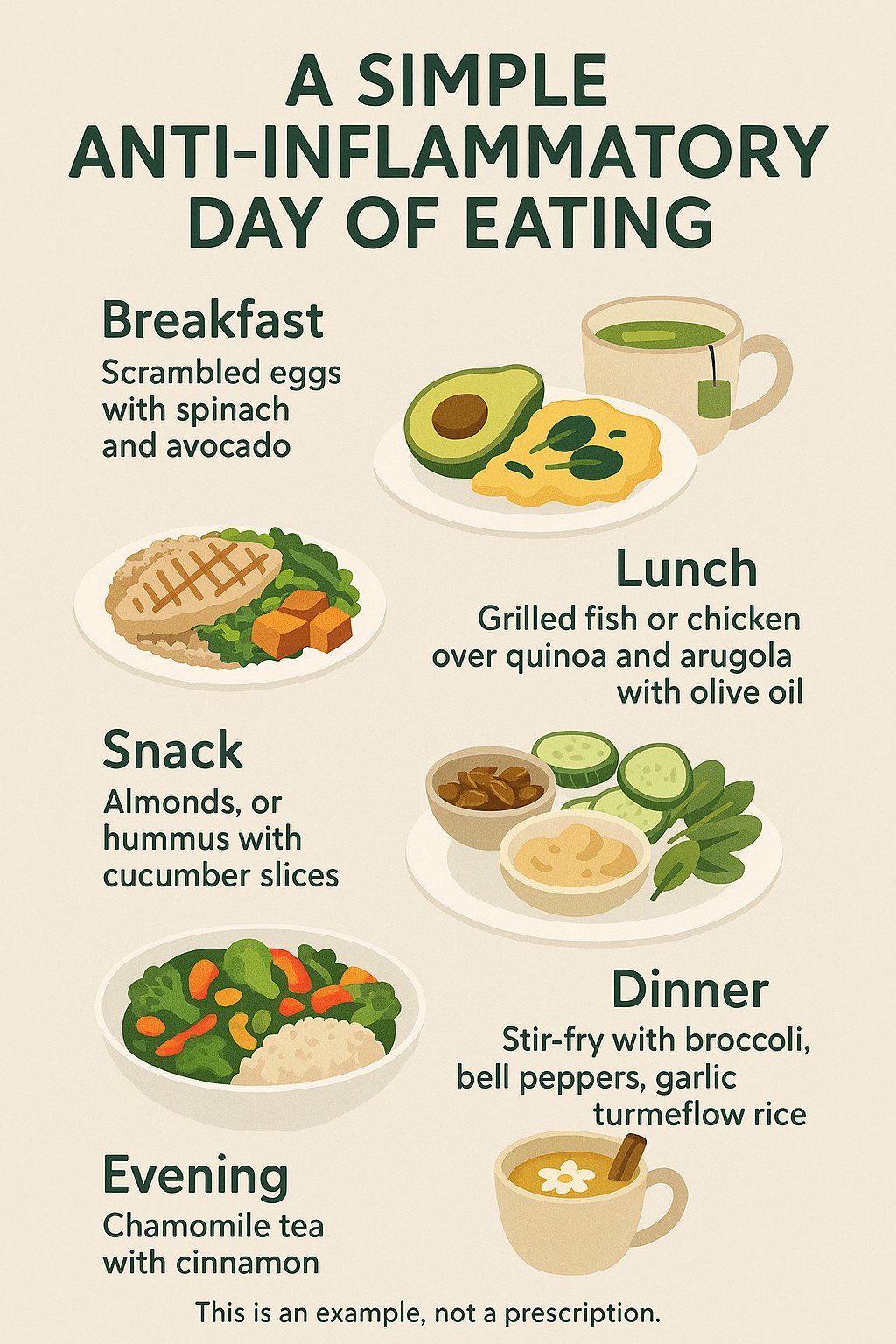
A Simple Anti-Inflammatory Day of Eating
Supportive Practices That Improve Metabolic Response
These aren’t rituals but regulation tools.
– Pause before eating: A few slow breaths lower cortisol, which directly affects insulin sensitivity.
– Eat without rushing: Stress impairs digestion, even when food quality is high
– Prep a little ahead: Reducing decision fatigue lowers reliance on reactive choices.
Consistency beats intensity every time.
##The Real Shift
You are not broken. Your body isn’t resisting you, it’s responding to its environment. When inflammation is addressed and blood sugar stabilizes, clarity improves. Energy returns. Cravings quiet down. The body responds because it finally feels supported.
Start with one meal. One adjustment. One steady choice..
That’s how metabolic healing actually happens.
### Self-Check
What is one change you can make this week that would make meals easier on your body, not harder?